Breast cancer touches the lives of millions of women every year, often appearing with subtle changes that can be easy to brush off as nothing serious. The worry that comes with noticing something different in your body can feel overwhelming, especially when you’re juggling work, family, and everything else life throws at you. Yet staying informed about these changes gives you real power and peace of mind. In this guide, you’ll discover ten important warning signs experts want every woman to recognize — plus one simple daily habit at the end that could help you spot them early.
Understanding Breast Cancer Warning Signs: Why Awareness Matters
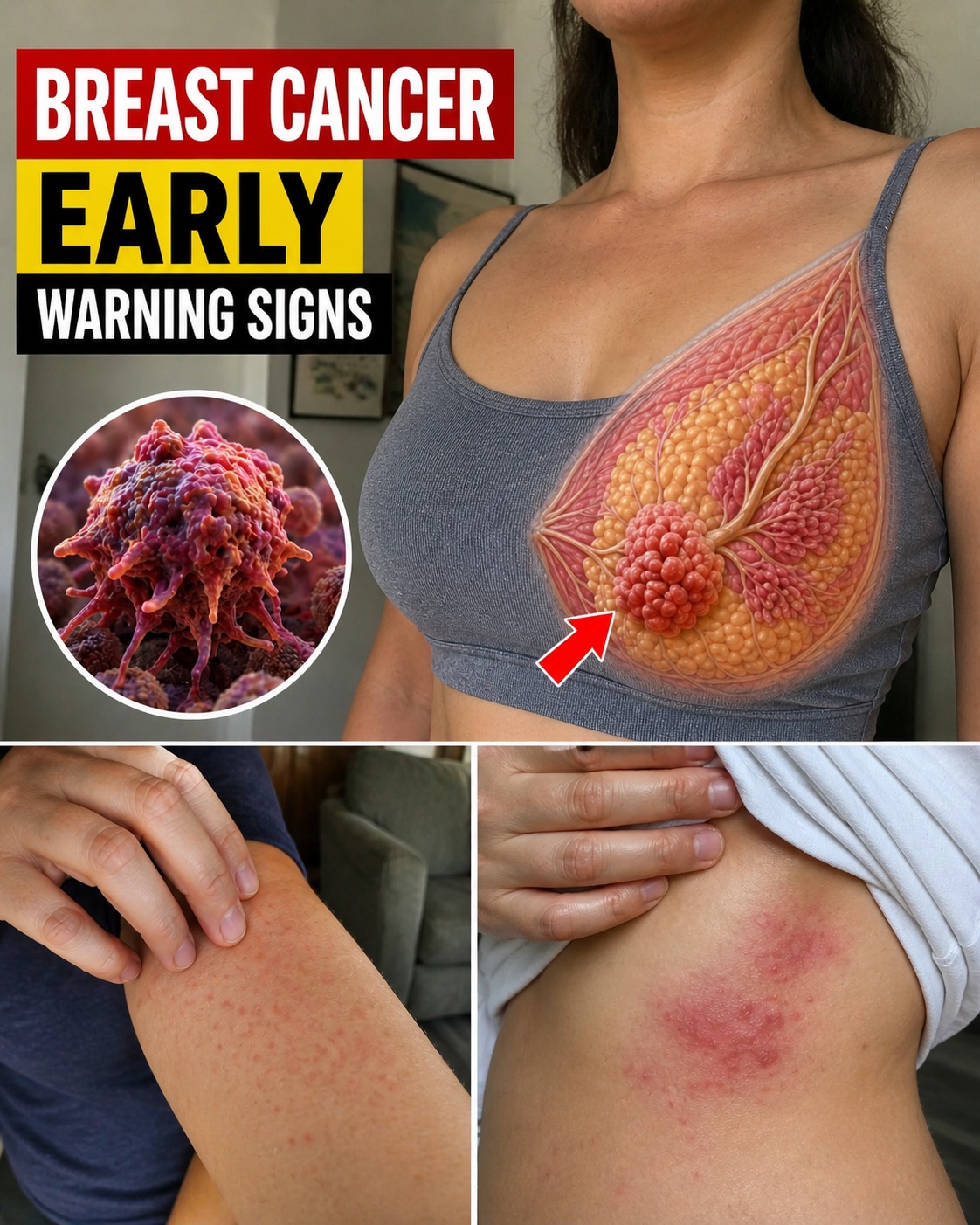
Most breast changes are not cancer. But knowing what’s normal for your body and what deserves a closer look can make a real difference. According to the Centers for Disease Control and Prevention (CDC) and the American Cancer Society, many breast cancers are found when women notice changes during self-exams or routine screenings. The image you see here — showing a detailed view of breast tissue with a highlighted area and close-ups of skin changes — reminds us how important it is to pay attention to both lumps and skin differences.
Here’s what many women don’t realize: some signs develop gradually while others appear more suddenly. That’s why regular awareness is key.
The 10 Warning Signs and Symptoms of Breast Cancer to Watch For
Health experts highlight these common changes. Remember, only a doctor can determine what any change means — but noticing them early is smart.
- A new lump or thickening in the breast or underarm
The most talked-about sign is often a new lump or area that feels different from the rest of the breast tissue. It may feel firm or irregular. Many lumps are benign, but any new one deserves attention.
- Swelling or change in breast size or shape
One breast suddenly looking or feeling larger, heavier, or shaped differently can signal something worth checking. Even without a lump, swelling in part of the breast matters. - Dimpling or puckering of the breast skin
Skin that looks pulled in or has a texture like orange peel (called peau d’orange) can happen when deeper tissue changes affect the surface. - Redness, rash, or flaky skin on the breast or nipple
As shown in the photos here, unexplained redness, irritation, or scaling that doesn’t clear up quickly can be a clue. Inflammatory breast cancer, though less common, often shows these skin changes across a larger area. - Nipple that turns inward or changes position
A nipple that suddenly retracts or pulls inward when it didn’t before is another change to note. - Nipple discharge that isn’t breast milk
Clear, bloody, or other unusual fluid from one nipple — especially if it happens without squeezing — should be discussed with a doctor.
- Pain or tenderness in the breast or nipple
While many breast cancers are painless, new or persistent pain in any part of the breast or nipple area is worth mentioning. - Changes in skin texture or color
Areas that become warmer, thicker, or discolored (pink, red, or darker tones depending on skin type) can appear. - Swelling in the lymph nodes under the arm or near the collarbone
Enlarged nodes in these areas sometimes appear before other noticeable breast changes. - Any persistent change that feels “off”
If something just doesn’t feel right — even if it doesn’t match the list above — trust your instincts and get it checked.
But here’s the encouraging part: most of these signs turn out to be something far less serious. Still, the only way to know for sure is to talk with a healthcare professional.
How These Signs Connect to What You See in Medical Illustrations
Medical diagrams like the one in the main image help show how a tumor might appear inside healthy breast tissue — with ducts, lobules, and surrounding fat. The close-up of the irregular cell reminds us that early changes can start small. And the skin photos highlight how surface redness or irritation can sometimes reflect deeper activity. Seeing these visuals makes it easier to understand why checking both how your breasts look and feel is so valuable.
Actionable Tip: Perform a Simple Breast Self-Exam Every Month
The good news? You can build this habit in just a few minutes a month. Here’s a straightforward step-by-step guide experts recommend:
- Choose a consistent time — Many women do this right after their period or on the first of the month.
- In the shower or lying down — Use the flat pads of your fingers in a circular motion, covering the entire breast from armpit to collarbone.
- Stand in front of a mirror — Look for any visible changes in size, shape, or skin while raising and lowering your arms.
- Gently squeeze each nipple — Check for any discharge.
- Repeat monthly — Compare what’s normal for you.
This quick routine helps you become familiar with your own body so any new change stands out right away.
When Should You See a Doctor?
Here’s a quick comparison to keep in mind:
| Normal Breast Changes | Changes That Warrant a Check-Up |
|---|---|
| Cyclic tenderness before period | Persistent pain or tenderness in one area |
| Temporary skin irritation | Redness, rash, or dimpling that lasts weeks |
| Occasional lumps that resolve | New, firm lump that doesn’t go away |
| Mild nipple discharge during pregnancy/breastfeeding | Spontaneous discharge from one nipple, especially if bloody |
The truth is, even if a change turns out to be nothing serious, peace of mind is worth the visit.
Why Early Awareness Can Be Life-Changing
Research consistently shows that catching breast cancer at an earlier stage often leads to more treatment options and better outcomes. Organizations like the American Cancer Society emphasize that knowing your normal and acting on changes is one of the most powerful tools women have.
Conclusion: Take Charge of Your Breast Health Today
You now know the ten key warning signs and symptoms of breast cancer — from lumps and swelling to skin changes and nipple differences. The most important takeaway? Listen to your body and don’t hesitate to reach out to a healthcare provider if something feels different. Pair this knowledge with regular self-exams and recommended screenings, and you’re giving yourself the best possible chance at staying ahead of any concerns.
Your health is worth the few minutes it takes each month. Start that habit today — your future self will thank you.
FAQ: Common Questions About Breast Cancer Warning Signs
Q1: Are these symptoms always cancer?
No. Many of these changes can come from cysts, infections, or hormonal shifts. The only way to know for sure is to have them evaluated by a doctor.
Q2: How often should I check my breasts?
Most experts suggest a monthly self-exam plus clinical exams and mammograms according to your age and risk factors. Talk with your healthcare provider about what’s right for you.
Q3: What if I notice a change but I’m not in pain?
Pain is not always present. Any new or unusual change — even without discomfort — should be checked promptly.
Disclaimer: This article is for educational and informational purposes only. It is not intended to diagnose, treat, or replace professional medical advice. Always consult a qualified healthcare provider for any concerns about your breast health or symptoms you experience.