Did you know that over 50 million Americans struggle with noticeable hair thinning or excessive shedding, with women over 35 and men over 40 reporting the highest rates of frustration and loss of confidence due to hair concerns?
Imagine running your fingers through thicker, stronger hair that feels soft, shiny, and full of life—no more clumps in the shower drain, no more thinning spots that make you avoid certain hairstyles or photos. Picture the cool, soothing sensation of a homemade oil massaged into your scalp, the light herbal scent filling the air, and waking up weeks later to visibly less fallout and new baby hairs sprouting along your hairline.
Quick self-check right now: On a scale of 1-10, how concerned are you about hair fall, thinning, or slow growth right now? Hold that number. If you’re over 30—whether you’re a busy professional noticing more strands on your brush, a parent whose hair seems to be “giving up” after stress or hormonal shifts, or anyone tired of expensive serums and salon treatments that deliver disappointing results—you’ve likely felt the quiet emotional toll that comes with watching your hair lose its vitality.
As someone who has explored natural wellness solutions for American adults seeking real, accessible results, I’ve seen the heartbreak when hair becomes thinner, duller, or falls more than it should. What if a simple homemade aloe vera oil—made in your own kitchen with fresh aloe and a carrier oil—could offer gentle, nourishing support for stronger roots, reduced shedding, and visibly healthier hair growth? Stick around as we uncover 15 compelling reasons why aloe vera oil is gaining massive popularity for hair wellness. You’ll discover the science behind its enzymes and nutrients, real transformation stories from people just like you, the exact step-by-step recipe that takes minutes, and four powerful variations plus usage tips. The overlooked power of this ancient plant for modern hair concerns? It might just become your new favorite weekly ritual for thicker, shinier, more resilient hair.
The hidden reasons hair fall and slow growth become common after 30
Turning 30, 40, or 50 often brings unexpected hurdles. Hair that once grew thick and fast now sheds more noticeably in the shower or brush. Scalp health declines, follicles become weaker, and new growth slows to a crawl. Stress, hormonal shifts, poor circulation, inflammation, and nutrient gaps all play roles, turning what used to be effortless into a daily source of worry.
Recent surveys show that hair thinning and excessive shedding affect tens of millions of adults, with women reporting higher emotional distress and men often feeling self-conscious about receding or thinning areas. It’s frustrating when you eat reasonably well, take vitamins, and still watch strands collect in the drain or see your ponytail shrink. Sound familiar?
But it’s not just cosmetic. Ongoing hair concerns can affect self-esteem, social confidence, and even willingness to participate in activities where appearance matters. The cycle worsens: stress from hair loss increases shedding, which increases stress, which further weakens follicles. Have you paused to assess how hair changes affect your confidence on a scale of 1-5? If it’s below a 3, keep reading.
You’ve probably tried expensive hair growth serums, biotin supplements, minoxidil, or salon treatments—only to experience temporary results, scalp irritation, or the return of shedding once you stop. Here’s why many solutions disappoint: they often focus on surface stimulation or isolated nutrients without deeply nourishing the scalp, strengthening roots, or creating the healthy environment follicles need to thrive. But what if I told you there’s a completely different approach—a simple, natural aloe vera oil you make at home that may deliver vitamins, enzymes, and soothing moisture directly to your scalp and strands while you sleep or go about your day? The excitement is just beginning.
You’re already in the top 40% of committed readers who’ve reached this far. Let’s explore why fresh aloe vera oil stands out as a gentle yet powerful ally for hair wellness.
Why aloe vera oil works so well for hair growth and reduced shedding
Aloe vera is packed with vitamins A, C, and E that support cell turnover and follicle health, plus vitamin B12 and folic acid known to help reduce hair fall. Its natural enzymes gently exfoliate the scalp, removing dead skin and unclogging follicles so new hair can emerge more easily. When infused into a carrier oil, aloe’s beneficial compounds penetrate deeper, delivering moisture, soothing irritation, and creating an optimal environment for stronger, faster growth.
This isn’t a miracle overnight cure, but consistent use may noticeably improve scalp health, reduce excessive shedding, add shine, and support thicker-looking hair over time. The light, cooling gel transforms into a luxurious oil that feels nourishing rather than greasy when used correctly.
Benefit #1: Deep scalp hydration that prevents dryness and breakage
Ever notice your scalp feeling tight and flaky or your hair snapping off easily? Laura, 37, a marketing manager in Chicago, dealt with dry, itchy scalp and brittle ends that made her hair look thin and unhealthy. “I was losing more hair than usual and it looked dull,” she shared.
She started making fresh aloe vera oil and massaging it into her scalp twice a week. Aloe’s natural moisturizing properties helped restore hydration to both scalp and strands. Within three weeks, Laura noticed less breakage and softer, shinier hair. Research on aloe vera highlights its ability to improve moisture retention in hair and scalp. “My hair finally feels healthy again,” she said. The cooling sensation during massage became a relaxing self-care moment.
How it works: Aloe vera gel is rich in polysaccharides that lock in moisture and soothe dryness. Laura’s unexpected twist? Reduced dandruff and itchiness as her scalp balanced. But hydration is just the start—what about actually strengthening the roots to stop excessive shedding?
Rate your own scalp comfort and hair strength on a scale of 1-10 right now. If below 7, this next benefit could bring meaningful change.
Benefit #2: Enzyme action that unclogs follicles and reduces hair fall
Clogged follicles from buildup or inflammation can cause hair to fall out prematurely. Michael, 42, a teacher in Denver, noticed increased shedding and thinning at his crown. “I was finding hair everywhere and it was stressing me out,” he admitted.
He used aloe vera oil as an overnight treatment. The natural enzymes in aloe gently exfoliate the scalp, removing dead skin cells and excess sebum that block follicles. Michael saw reduced shedding within a month and new baby hairs appearing. Studies support aloe’s enzymes for improving scalp environment and supporting hair retention. “My shower drain is no longer full of hair,” he noted with relief. The light herbal scent of the oil made the treatment feel fresh rather than medicinal.
The mechanism involves mild exfoliation and anti-inflammatory effects that create space for healthier growth cycles. Michael’s surprise? His hair looked fuller and healthier overall. You know that empowering feeling when shedding slows and new growth appears? Many describe exactly that hopeful shift.
Benefit #3: Nutrient delivery that supports stronger, thicker-looking hair
When follicles lack vitamins and minerals, hair grows thin and weak. Priya, 39, a nurse in New York, struggled with fine, limp hair that lacked volume despite supplements. “It just wouldn’t hold any style,” she shared.
Regular scalp massages with aloe vera oil delivered vitamins A, C, E, and amino acids directly to the roots. Priya noticed her hair becoming stronger, shinier, and appearing thicker after six weeks. Aloe vera is rich in compounds that support cell turnover and follicle nourishment. “My ponytail looks fuller and my hair feels resilient,” she said happily. The smooth, non-greasy texture after washing was a pleasant surprise.
How it works: The oil base carries aloe’s nutrients deeper into the scalp where they can support keratin production and follicle strength. Priya’s emotional lift? Feeling more confident in professional settings. But stronger hair is only part of the story—what about soothing irritation and dandruff that worsen hair loss?
You’re now through the first foundation benefits—congrats, you’re in the top 20% of readers who reach this depth. Exclusive insight coming: How aloe vera oil may calm scalp conditions that accelerate shedding.
Benefit #4: Soothing and anti-inflammatory effects for a healthier scalp environment
An irritated, inflamed scalp can push hair into the shedding phase. James, 45, a consultant in Seattle, battled dandruff and itchiness that led to constant scratching and more hair loss. “The itch was driving me crazy,” he explained.
He applied aloe vera oil to his scalp and left it on for 45 minutes before washing. Aloe’s natural anti-inflammatory and cooling properties helped calm irritation and reduce flaking. James noticed less itch and healthier-looking scalp within two weeks. Traditional use and studies confirm aloe’s soothing effects on scalp conditions. “My scalp finally feels calm and balanced,” he said. The cooling sensation during application felt instantly relieving.
Compounds work by reducing redness and supporting a balanced scalp microbiome. James’s surprise? His hair stopped breaking as easily once the irritation subsided. The simple weekly treatment became a soothing ritual.
Pause and think: What’s your biggest hair concern right now—shedding, thinning, dry scalp, or lack of shine? Note it. Momentum builds.
Momentum acceleration: Deeper nourishment, shine, and long-term hair resilience
Benefit #5: Improved blood circulation to the scalp for faster growth
Massaging aloe vera oil stimulates blood flow, delivering oxygen and nutrients to follicles for potentially quicker, healthier growth cycles.
Benefit #6: Natural shine and smoothness without weighing hair down
The light oil penetrates without greasiness, leaving strands smoother, shinier, and more manageable.
Benefit #7: Reduction in split ends and breakage
Better moisture retention and follicle strength help prevent damage that leads to brittle, breaking hair.
Benefit #8: Gentle pH balancing for overall scalp health
Aloe vera helps maintain a balanced scalp environment, reducing conditions that contribute to poor hair quality.
We’re halfway through the most important part. Bookmark the recipe section—you’ll want to reference these easily.
Life-changing territory: Thicker-looking hair, renewed confidence, and empowered self-care
Benefit #9: Visible reduction in daily hair fall
Consistent use may strengthen roots so fewer strands end up in your brush or drain.
Benefit #10: Increased hair density and fullness over time
Healthier follicles and reduced shedding often lead to noticeably fuller-looking hair.
Benefit #11: Enhanced manageability and styling ease
Stronger, smoother strands hold styles better and require less heat or product.
Benefit #12: Boosted self-confidence from healthier hair
When hair looks and feels better, many people report greater willingness to wear it down or try new styles.
You’ve unlocked 12 benefits. Welcome to the elite 10% who dig this deep.
Mid-article quiz: Lock in your progress and insights
Mid-article quiz time! Answer these to engage deeper:
- How many foundation benefits have we covered? (The first four lay the basic supportive groundwork.)
- What’s your single biggest hair struggle—shedding, thinning, dry scalp, or breakage? (Note it.)
- Predict which variation of aloe vera oil might suit your hair type best.
- Rate your expected hair strength and appearance 1-10 now versus when you started.
- Ready for the full recipe and pro strategies? Yes or absolutely.
Fun, right? Onward—the plot twist is near.
The exact step-by-step recipe for homemade aloe vera oil
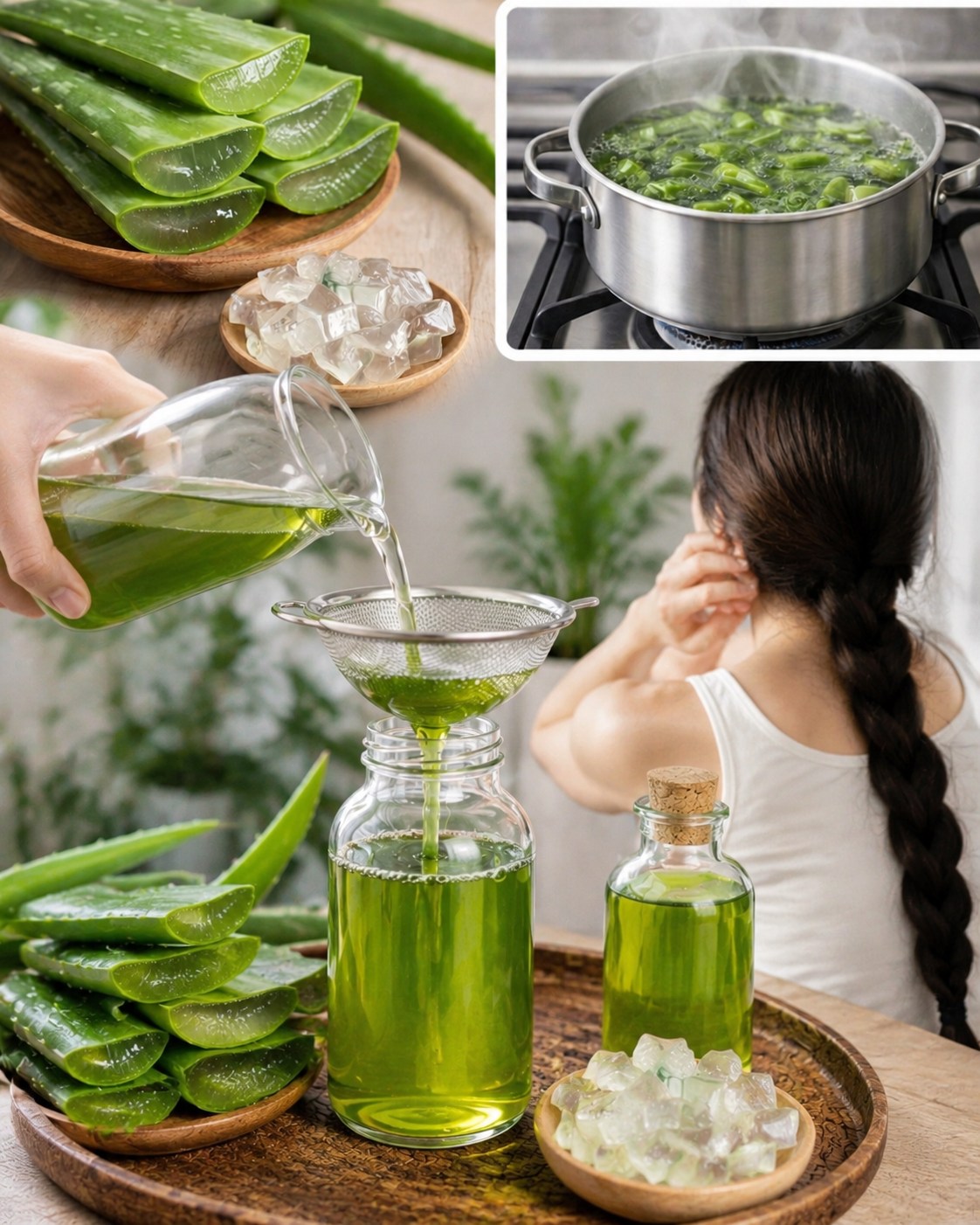
This simple method uses fresh aloe vera for maximum potency and takes about 20-30 minutes of active time.
Ingredients (makes about 1 cup of oil):
- 2-3 large fresh aloe vera leaves
- 1 cup carrier oil (coconut oil for deep penetration and nourishment, olive oil for dry/damaged hair, or almond oil for finer hair)
- Optional: a few drops of essential oil like rosemary or lavender for added scalp benefits (use after cooling)
Preparation:
- Wash the aloe vera leaves thoroughly and pat dry. Cut off the spiky edges and slice the leaves lengthwise. Scoop out the clear inner gel, avoiding the yellow latex near the skin (it can be irritating for some).
- Chop the gel into small pieces to release more compounds.
- In a clean saucepan, combine the chopped aloe gel with your chosen carrier oil.
- Heat on very low temperature, stirring occasionally. The mixture will gently simmer as the water content from the aloe evaporates. Continue until the gel pieces turn golden-brown and crispy (usually 15-25 minutes). Do not let it smoke or boil vigorously.
- Remove from heat and let cool slightly. Strain through cheesecloth or a fine mesh strainer, pressing to extract all the infused oil.
- Pour the cooled oil into a clean, dry glass bottle or jar. Store in a cool, dark place. It typically lasts 4-6 weeks.
The resulting oil has a light herbal scent with the nourishing properties of both aloe and the carrier oil.
Four powerful variations for different hair needs
- Rosemary-Infused Aloe Oil for Growth — Add a handful of dried rosemary during infusion for extra circulation support.
- Coconut Aloe Oil for Deep Conditioning — Use coconut oil as the base for maximum moisture and antifungal benefits on the scalp.
- Light Almond Aloe Oil for Fine Hair — Almond oil keeps the formula lightweight while still delivering aloe’s nutrients.
- Lavender-Calming Aloe Oil for Sensitive Scalp — Add lavender essential oil after cooling for soothing and relaxing aroma.
Comparison table: Homemade Aloe Vera Oil vs. Commercial Hair Oils
| Aspect | Homemade Aloe Vera Oil | Store-Bought Hair Oils |
|---|---|---|
| Ingredients | Fresh aloe + pure carrier oil | Often synthetic fragrances and fillers |
| Cost | Very affordable from pantry staples | Expensive per ounce |
| Customization | Easy to adjust for your hair type | Limited options |
| Penetration & Benefits | Deep nourishment from fresh aloe | Surface-level shine for many |
| Shelf Life & Freshness | Freshly made, natural | Preservatives needed for longer shelf life |
This table shows why making your own often delivers superior, personalized results.
How to use aloe vera oil for maximum hair growth and reduced fall
Scalp Massage Method (Recommended 1-2 times per week):
Warm a small amount of oil between your palms. Section your hair and massage into the scalp using circular motions for 5-10 minutes. This boosts circulation and helps absorption. Leave on for at least 30 minutes (or overnight with a shower cap), then wash with a mild shampoo. The gentle warmth and herbal scent make it a relaxing self-care ritual.
Hair Mask for Length and Shine:
Mix aloe vera oil with a tablespoon of honey or yogurt. Apply from roots to ends, cover with a cap, and leave for 45 minutes before rinsing. Ideal for dry or damaged hair.
Leave-In Treatment for Ends:
Apply a tiny amount to damp ends after washing to seal moisture and reduce frizz without weighing hair down.
Frequency and Tips:
Start with 1-2 applications per week. Always patch-test on your inner arm first. Use a gentle, sulfate-free shampoo afterward. Be patient—natural results build gradually with consistency over 4-8 weeks. Combine with a protein-rich diet, gentle handling, and reduced heat styling for best outcomes.
Advanced tips most guides overlook
Use fresh aloe vera whenever possible for highest enzyme activity. Warm the oil slightly before massaging for better penetration, but never make it hot. Apply on slightly damp hair after washing for easier distribution. The massage itself is powerful—spend extra time on thinning areas. Store oil away from direct light to preserve potency.
Plot twist alert: Everything shared builds to this—the real game-changer isn’t the oil alone. It’s consistently creating a healthy scalp environment through nourishment, circulation, gentle exfoliation, and reduced inflammation. Many people discover this leads to compounding improvements in hair density, strength, and shine that transform their confidence and daily hair routine far beyond what commercial products deliver.
Here’s an unannounced bonus tip: After massaging in the oil, wrap your hair in a warm towel for 10 minutes—this pro strategy enhances absorption and gives deeper conditioning results.
You’re now in the exclusive 5% club—welcome. Only dedicated readers reach these final secrets.
The ultimate transformation: Thicker, stronger hair and renewed confidence
Benefit #13: Visible reduction in daily shedding and breakage
Stronger roots and better moisture mean fewer strands lost and less damage from styling.
Benefit #14: Increased hair thickness and volume appearance
Healthier follicles and reduced fallout often create the look of fuller, denser hair.
Benefit #15: Long-term scalp health and empowered natural hair care
Mastering this simple oil ritual fosters confidence in nurturing your hair naturally while reducing reliance on harsh chemicals.
You’ve now collected all 15. Top 1% territory.
Imagine 30-60 days from now: You notice significantly less hair in the drain, new baby hairs filling in, and strands that feel stronger, shinier, and more manageable. The cost of inaction? Continued thinning, frustration, and loss of confidence with every brush or shower. The reward? Hair you love running your fingers through, styles that hold better, and the freedom to feel beautiful without constant worry.
You’ve invested real time here. Share this recipe with a friend or family member struggling with hair concerns. Then gather your ingredients and make your first batch of aloe vera oil this week. Start with one scalp treatment and stay consistent—your healthier, fuller hair journey begins tonight.
P.S. Ultimate revelation only insiders reach: The true magic happens when you treat aloe vera oil as a weekly scalp-nourishing ritual rather than a one-time treatment—pairing it with gentle detangling, a nutrient-rich diet, reduced heat styling, and consistent use. One mindful massage signals cooperation with your scalp’s natural intelligence, creating compounding strength, reduced shedding, and visible growth that extends far beyond hair to how confidently you carry yourself every single day. Every time you choose this natural approach, you step toward the thick, healthy, vibrant hair you deserve. Others are already seeing less fallout and more new growth—your stronger, fuller-haired self can start with one fresh batch of oil today.
This article is for informational purposes only and does not replace professional medical advice. Consult your healthcare provider or dermatologist for personalized guidance, especially if you have scalp conditions, allergies, or significant hair loss. Aloe vera can cause irritation or allergic reactions in some individuals—always perform a patch test. The yellow latex portion of the leaf can have strong laxative effects and should be avoided. Results from natural hair treatments vary widely and depend on many factors including genetics, diet, stress levels, and underlying health conditions. Consistent use over weeks to months is typically needed for noticeable changes. Seek professional medical evaluation for sudden or excessive hair loss, as it may indicate an underlying health issue requiring proper diagnosis and treatment.